
The group
Videtics and Technis: two stories, one vision for physical spaces
One began with a connected tennis court in Lausanne, the other with artificial intelligence in Sophia Antipolis. Since 2025, Videtics and Technis have brought their expertise together to help places that welcome people become safer and better used.

+

Your cameras see. Your sensors measure. Together, we make sense of your spaces.
Two paths that came together

2015 · Lausanne
From the tennis court to physical spaces
At EPFL, the Technis project explored a connected surface capable of measuring impacts and movement on a tennis court. This opened up a wider possibility: understanding how a place is used through what happens within it. Technis went on to develop measurement solutions for buildings and public-facing spaces.
2019 · Sophia Antipolis
Making images useful, without identifying people
Alan Ferbach, Pierre-Alexis Le Borgne and Alexandre Reboul founded Videtics. Cameras generate vast amounts of footage, but teams cannot watch everything. Perception helps operators spot situations, count passages and find relevant sequences. Video, ethics and analytics express the idea behind the name.

25 February 2025
One European group
Technis announced its acquisition of Videtics. Sensor-based measurement and video analytics became part of the same group, bringing complementary expertise to understanding and securing physical spaces. Videtics retains a clear identity within that group: AI applied to video.
The right tool, in the right place.
A camera and a sensor do not always answer the same question. The group brings both approaches together to choose what fits each space.
Videtics · Video AI
Perception uses compatible existing cameras to detect situations, measure flows and support video search. Streets, platforms, perimeters and car parks: analytics give operators context.
Technis · Sensors and data
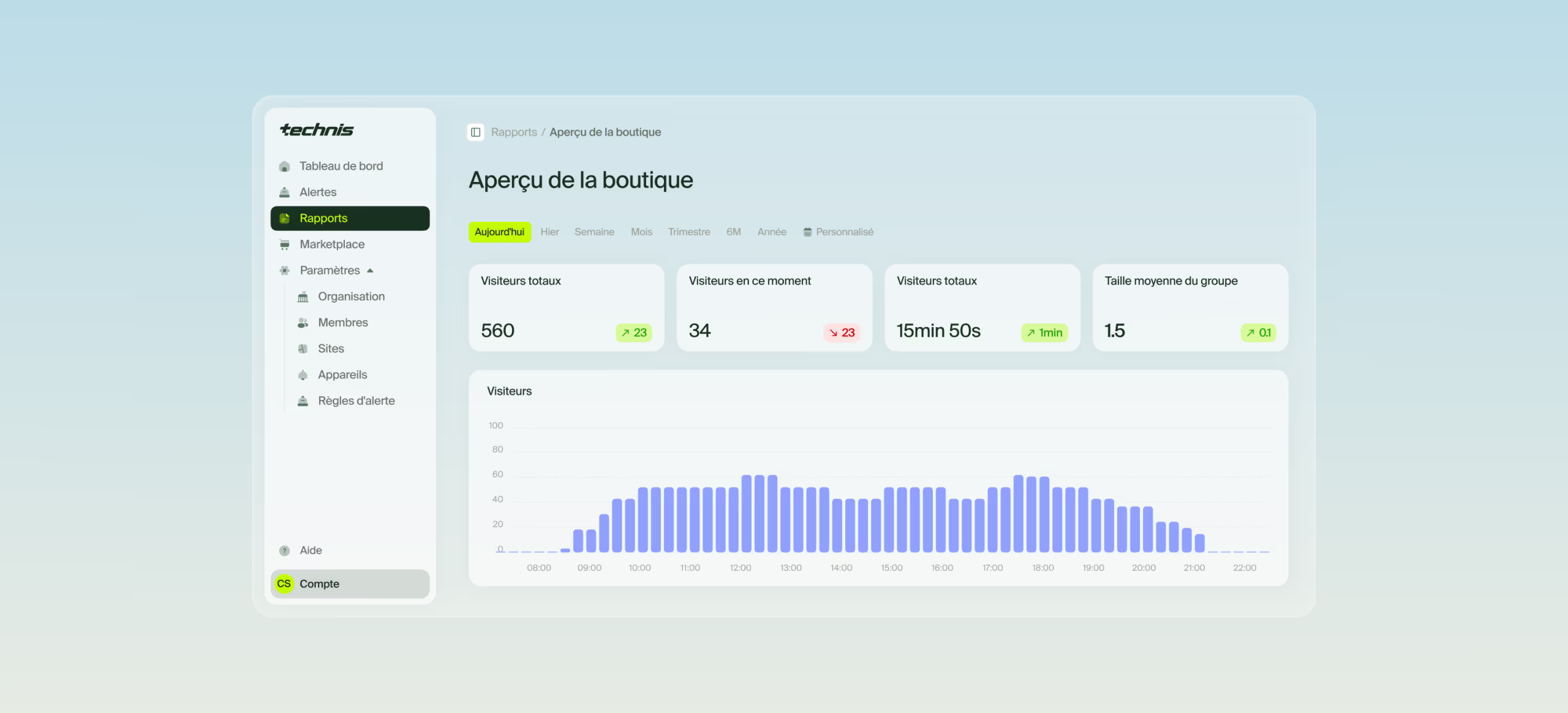
Sensors measure footfall and occupancy, including where images are not appropriate. Technis Spaces brings together indicators of space usage, movement, energy and environmental conditions, depending on the equipment deployed.
One station, several needs.
On platforms, video analytics can help operators notice a person on the ground or an overcrowded area. Sensors measure occupancy where filming is not wanted. Useful indicators can be brought together in Technis Spaces. Alerts, image access and exchanges between tools are defined for the project.
Technis Spaces: a shared view of your indicators.
Counts and occupancy measurements from Perception can complement sensor data. Connector scope is agreed with you: a shared view does not mean automatically transferring every image or alert.
What the combination offers you
You use Videtics
You can explore adding sensors and bringing indicators together in Technis Spaces, while keeping Perception as your video analytics tool.
You use Technis
Compatible cameras can become an additional data source. Computing infrastructure and analytics are sized for your project.
You are an integrator
You can build projects combining video and sensors. Interfaces, responsibilities and support arrangements are agreed with the teams involved.
French expertise. A European group.

France
Sophia Antipolis
The heart of Videtics’ video expertise: AI research and Perception development.

Switzerland
Lausanne
The Technis headquarters, supporting the group’s development and its approach to physical spaces.
Videtics keeps its name. And what it stands for.
Videtics stands for connecting images to useful decisions, with ethics at the centre. Joining Technis broadens the possibilities; it does not replace operators or customers’ choices about their data.
Your questions about the group
Does Videtics still exist?
Yes. Videtics is a company within the Technis group and continues to develop Videtics Perception.
How do the two brands differ?
Videtics provides AI video analytics. Technis provides sensors and a platform for space data. The approaches complement one another.
Are my images sent to Switzerland?
Group ownership does not create an automatic transfer. With an on-site deployment, images are analysed on your infrastructure. Exports and remote access depend on the agreed architecture.
Do I need Technis Spaces to use Perception?
No. Perception has its own application. Integration with Technis Spaces serves projects that need to combine several data sources.
What happens to my existing contract?
Your contract sets out the applicable terms. Your contact can clarify upgrade options, support and any additional services.
Where is Videtics AI developed?
In Sophia Antipolis, France, by the Videtics teams.
Let’s talk about your spaces.
Cameras, sensors or a combination: let’s build an approach that fits your location and your teams.